
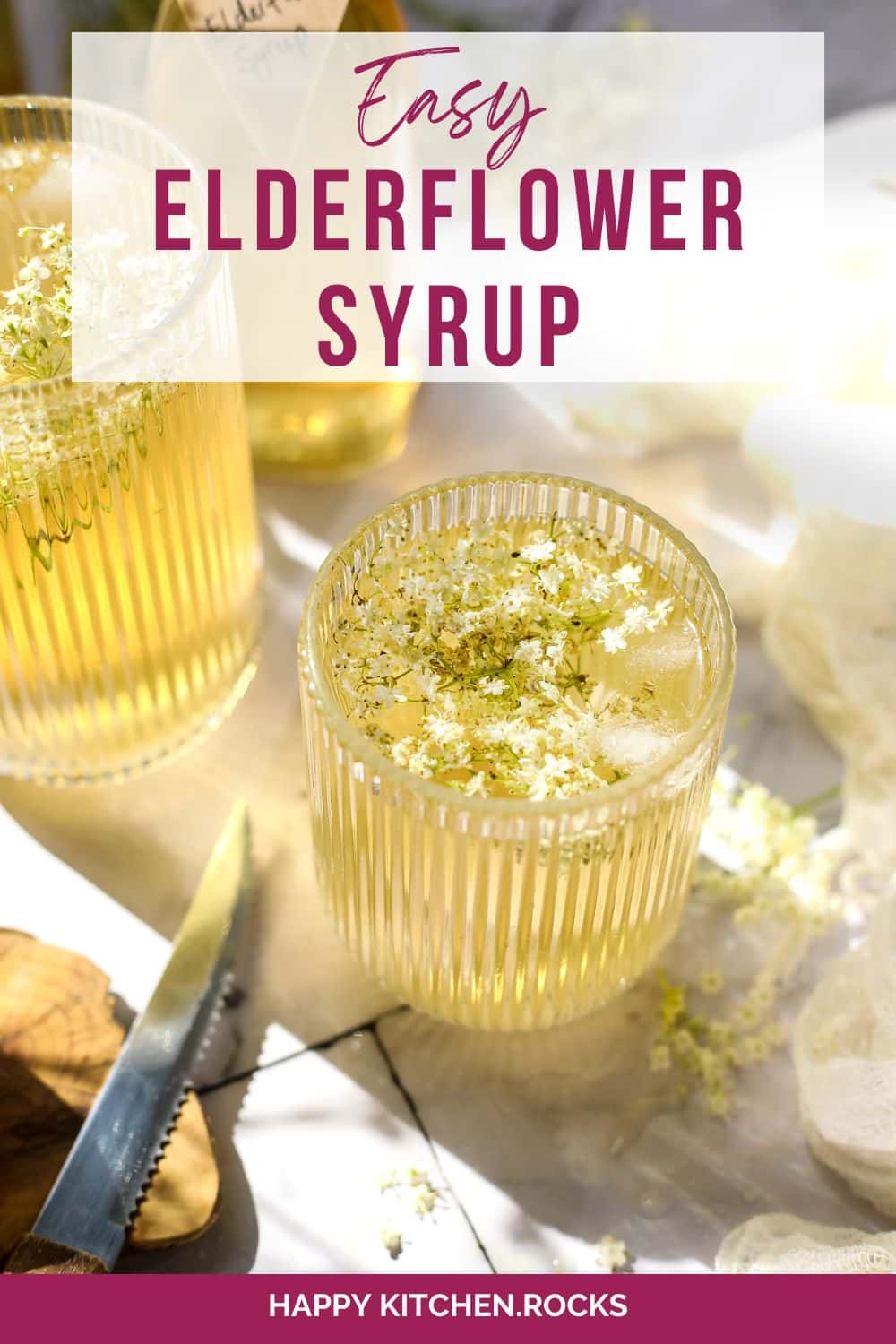
Make this delicate elderflower syrup with fresh blooms, lemon, and a touch of brown sugar for a lightly sweet, floral concentrate that captures the essence of spring. Perfect for drinks and desserts, it's simple, fragrant, and far better than store-bought.
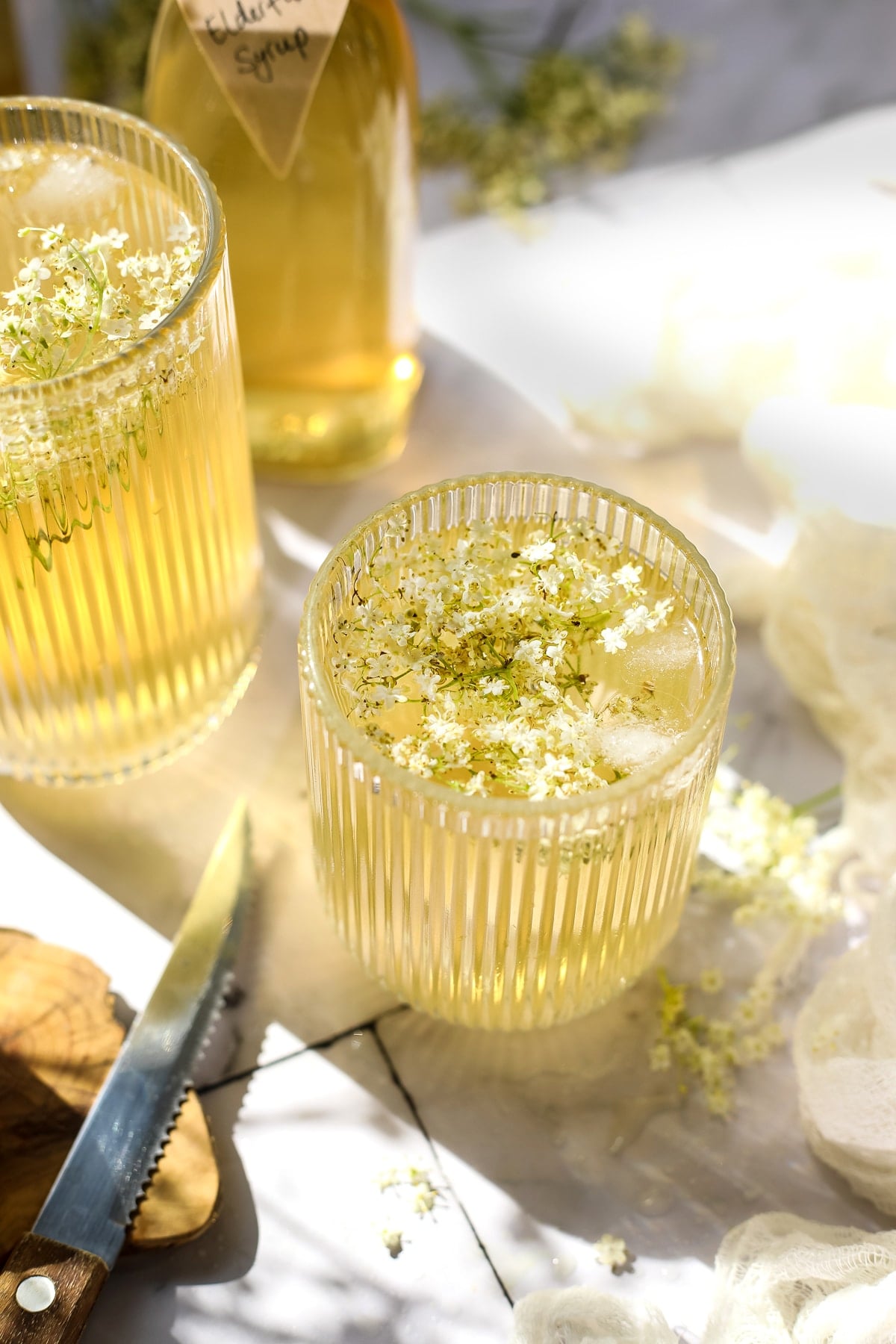
There's something magical about elderflower season. For just a few short weeks in late spring and early summer, the air smells sweet and floral, and those delicate creamy blossoms turn into one of the most refreshing homemade treats imaginable: elderflower syrup.
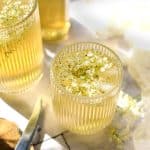
This simple recipe uses fresh elderflower florets, lemon, water, and just enough sugar for safe storage while keeping it lighter than traditional versions. Drizzle it into sparkling water, cocktails, lemonade, desserts, or iced tea for a beautifully fragrant taste of the season.
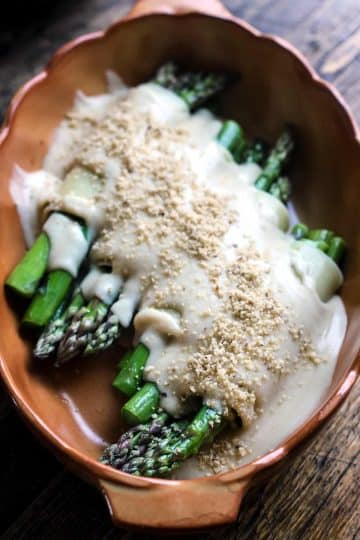
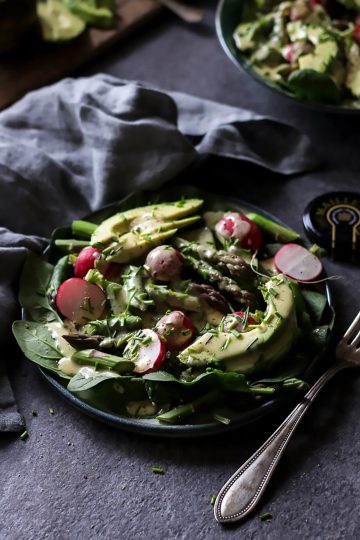
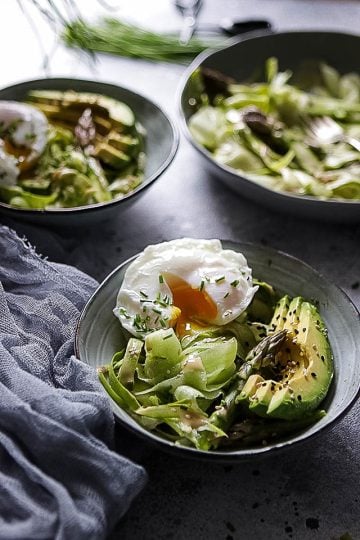
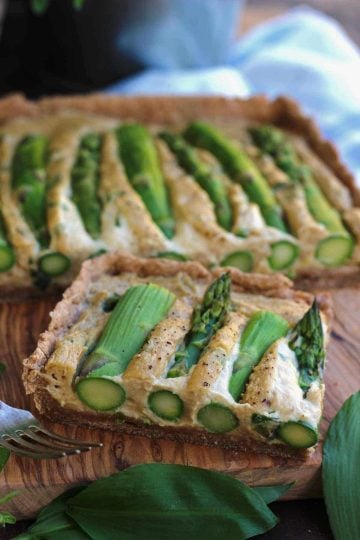
Inspired by my homemade sweet woodruff lemonade, this drink pairs beautifully with fresh spring dishes like asparagus quiche, asparagus radish salad, shaved asparagus salad, strawberry rhubarb crostini, wild garlic pesto, and creamy wild garlic soup.
Why You'll Love This Elderflower Syrup
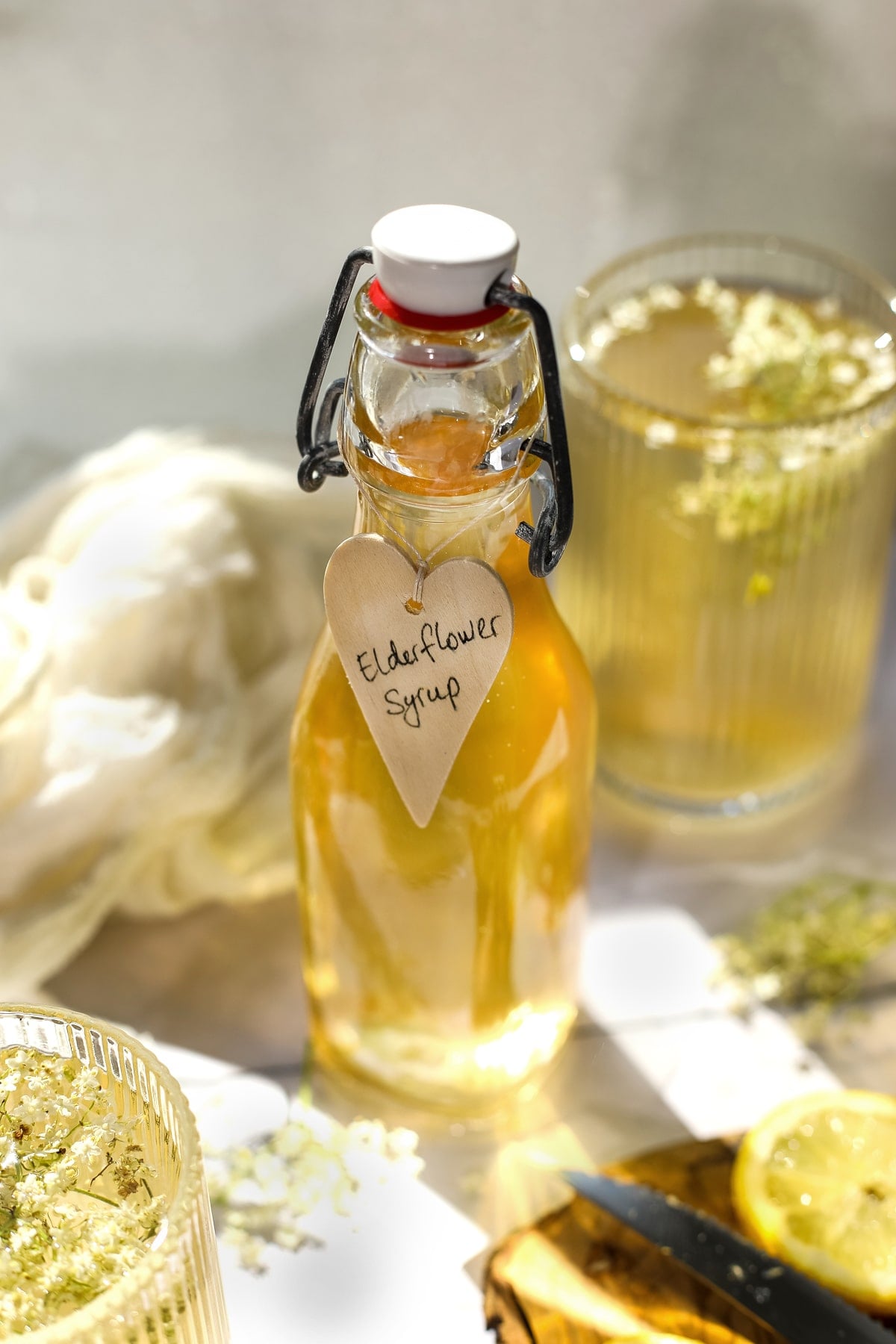
Elderflower syrup is especially popular throughout Europe during late spring and early summer, when elder trees bloom for only a few precious weeks. In countries like Germany, Austria, Denmark, and the UK, elderflower cordial is a seasonal tradition often served with sparkling water, prosecco, or desserts.
Homemade syrup tastes fresher, more floral, and less artificial than store-bought versions and makes the best tasting elderflower lemonade. Plus, you can control the sugar level and avoid preservatives.
Jump to:
Ingredients
Use fresh elderflower heads picked on a dry sunny day for the best aroma. I chose simple ingredients that allow the floral flavor to shine naturally without becoming overly sweet.
- fresh elderflower florets
- lemon
- water
- sugar (see notes)
See recipe card for quantities.
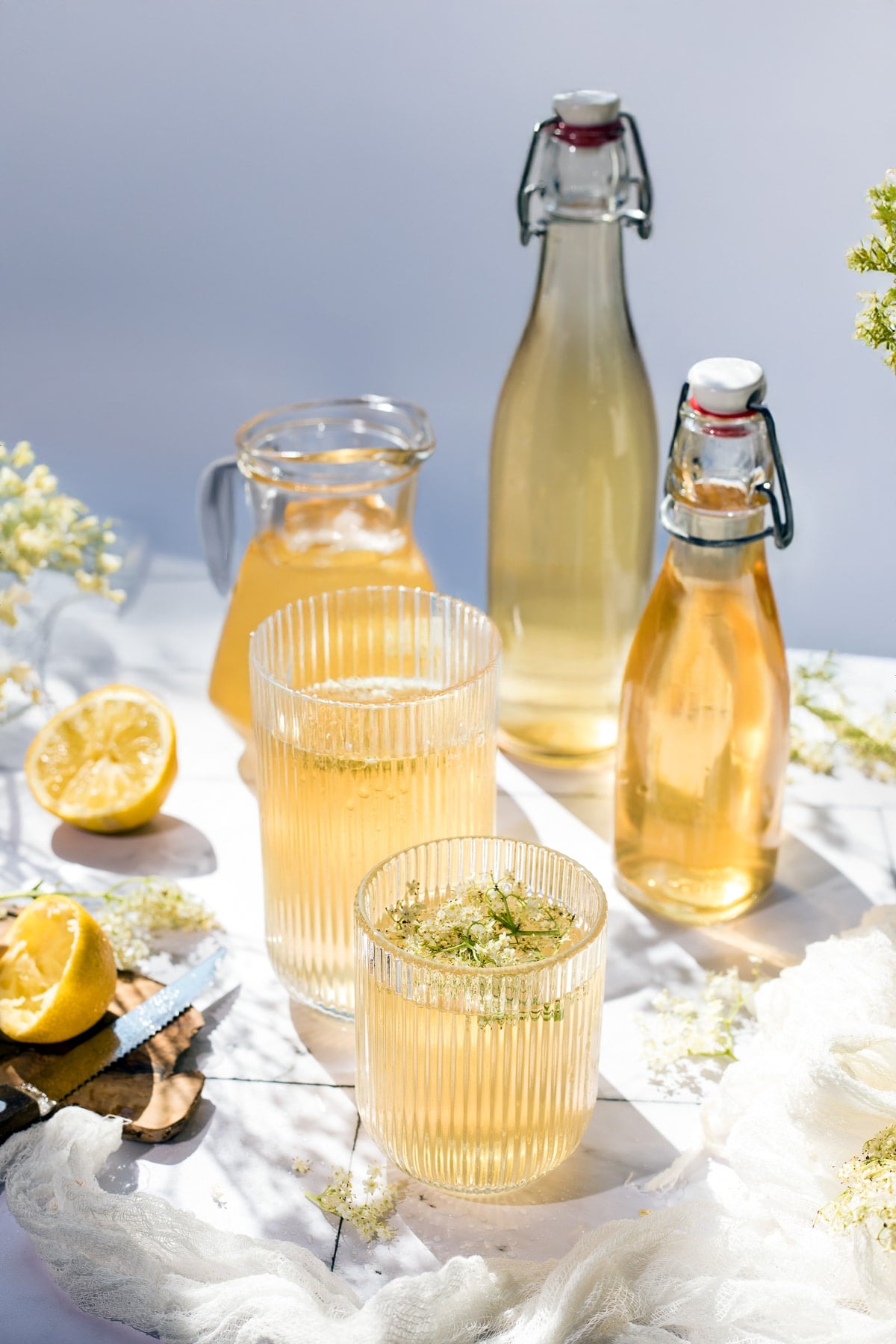
Fresh elderflowers provide the delicate floral aroma and subtle sweetness that make this syrup so special.
Lemon brightens the flavor and adds acidity, which helps with preservation. I also prefer using fresh lemon juice instead of chopped lemons because it creates a cleaner, brighter syrup without bitterness from the pith or prolonged steeping of the peel. The floral elderflower flavor stays more delicate and pure, while the citrus still adds freshness and acidity for preservation.
Sweeteners
For the sweetener, I used brown sugar, which gives the syrup a deeper, slightly caramel-like note compared to white sugar. It also adds a subtle warmth that pairs beautifully with the floral elderflower flavor and makes the syrup taste more rounded and less sharp.
You can also experiment with different sweeteners depending on your preference:
- White sugar: the most neutral option, keeps the floral flavor most pure and light
- Cane sugar: slightly less refined, with a gentle golden taste
- Coconut sugar: adds a more pronounced caramel tone, darker in flavor
- Honey: gives a floral complexity but changes the character of the syrup and shortens shelf life, so it's best stored refrigerated and used quickly
- Reduced sugar versions: possible for a lighter syrup, but always refrigerate or freeze as shelf stability decreases significantly
I prefer brown sugar here because it creates a more complex, slightly earthy sweetness that balances the bright citrus and delicate floral notes without overpowering them.
Instructions
Use this section for process shots, alternating between the step and image showing the step. Users don't like seeing process shots cluttering up the recipe card, so include your process shots here.
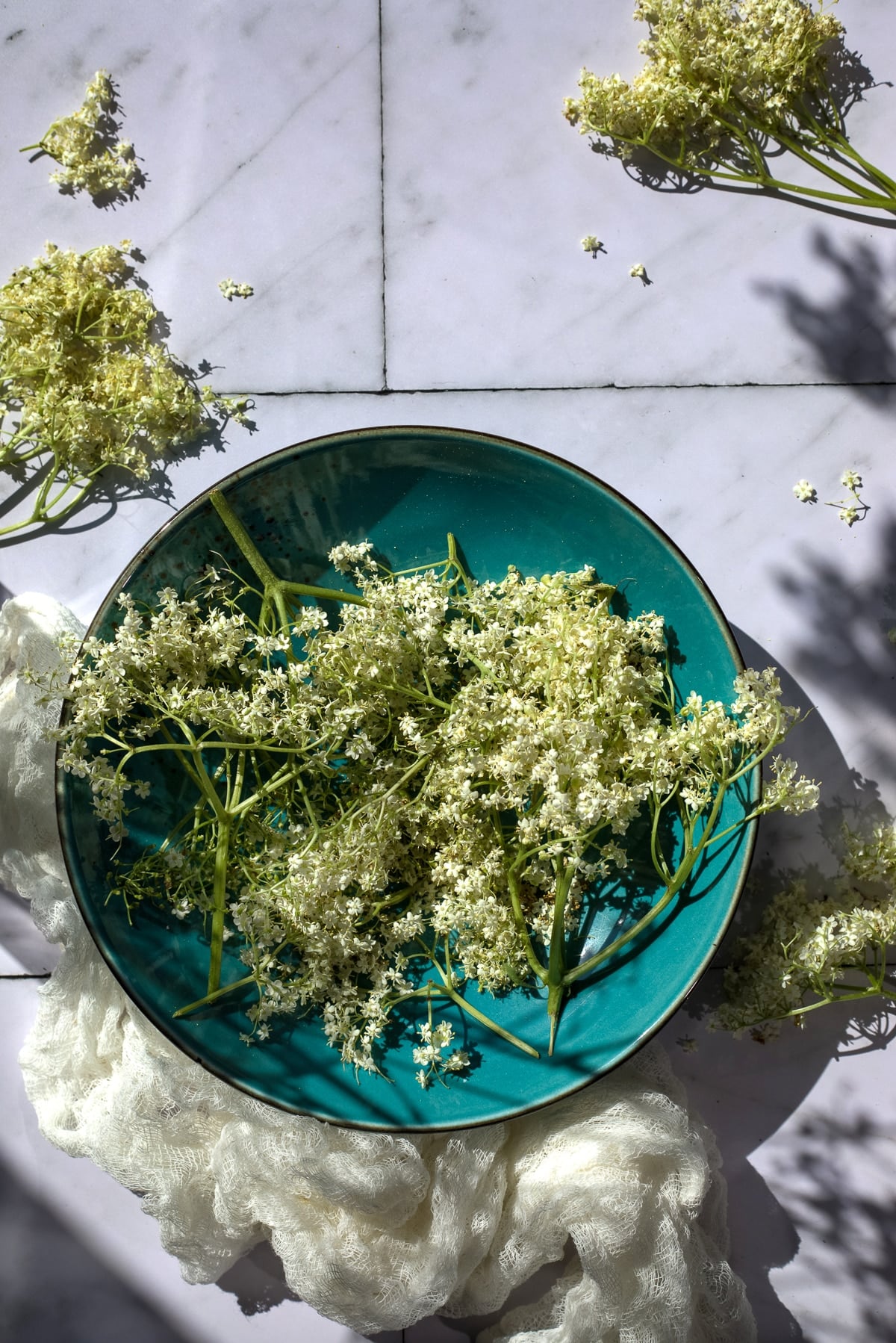
Step 1: Prepare the Elderflowers
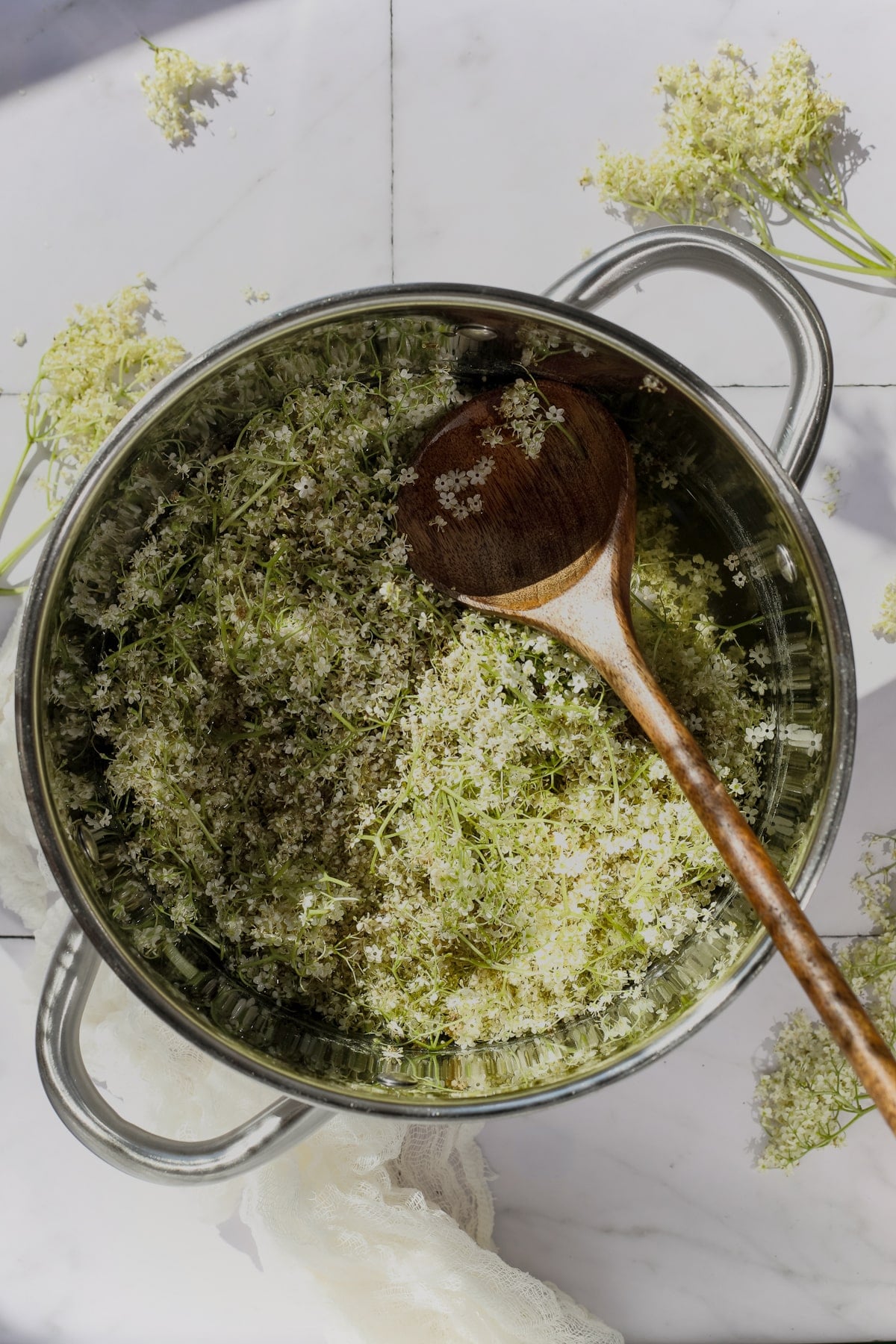
Shake the elderflower heads gently outdoors to remove any small insects. Avoid washing them if possible, as rinsing removes some of the fragrant pollen. Remove most of the thick green stems, as they can add bitterness.
Step 2: Simmer with Water and Lemon
Place the elderflower florets into a large pot with lemon juice and water. Bring to a gentle simmer and cook briefly to infuse the liquid with floral flavor.
Step 3: Strain the Syrup
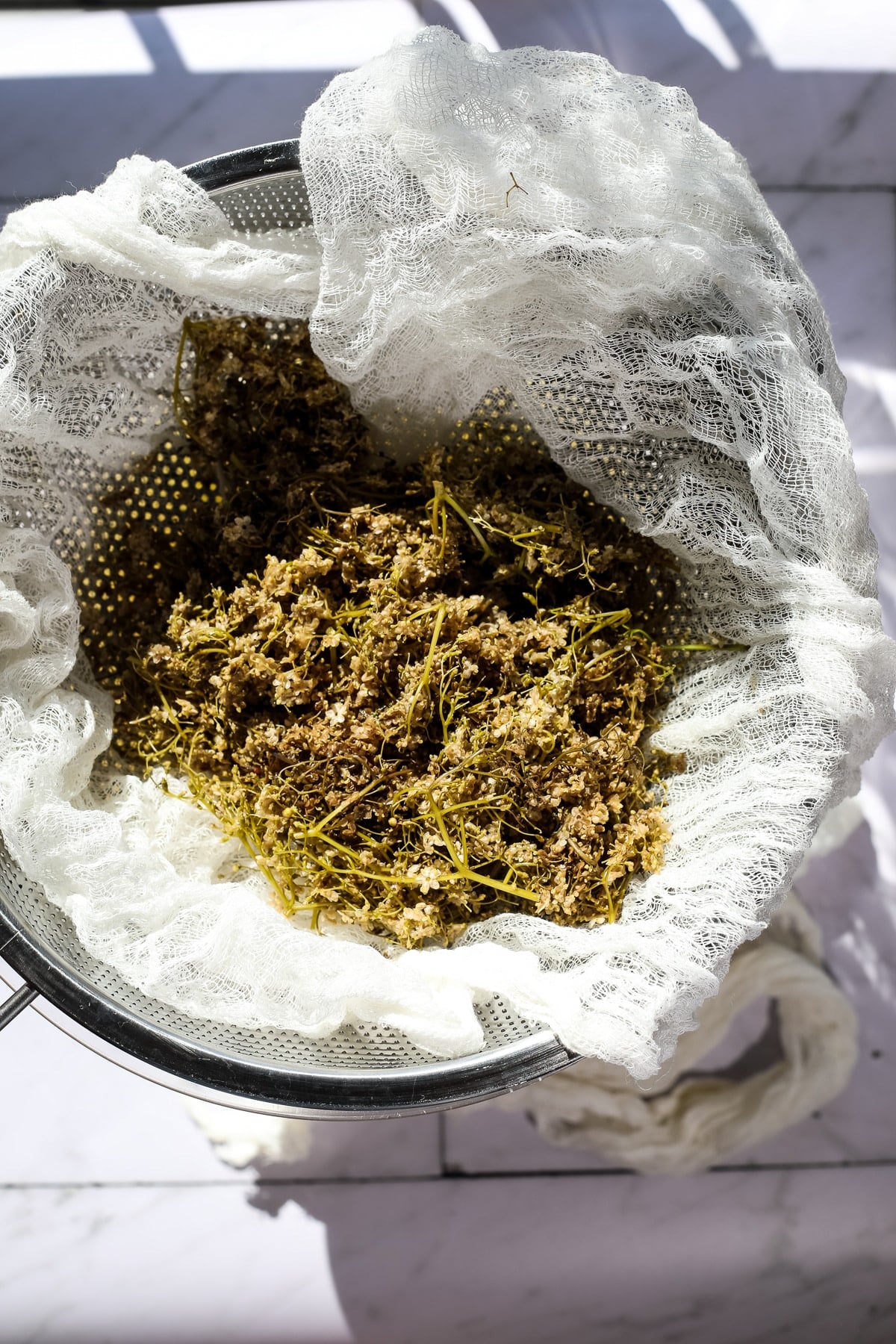
Pour the mixture through a cheesecloth-lined sieve into a bowl. Let it drain naturally without squeezing too hard, which can make the syrup cloudy or bitter.
Step 4: Add Sugar and Bottle
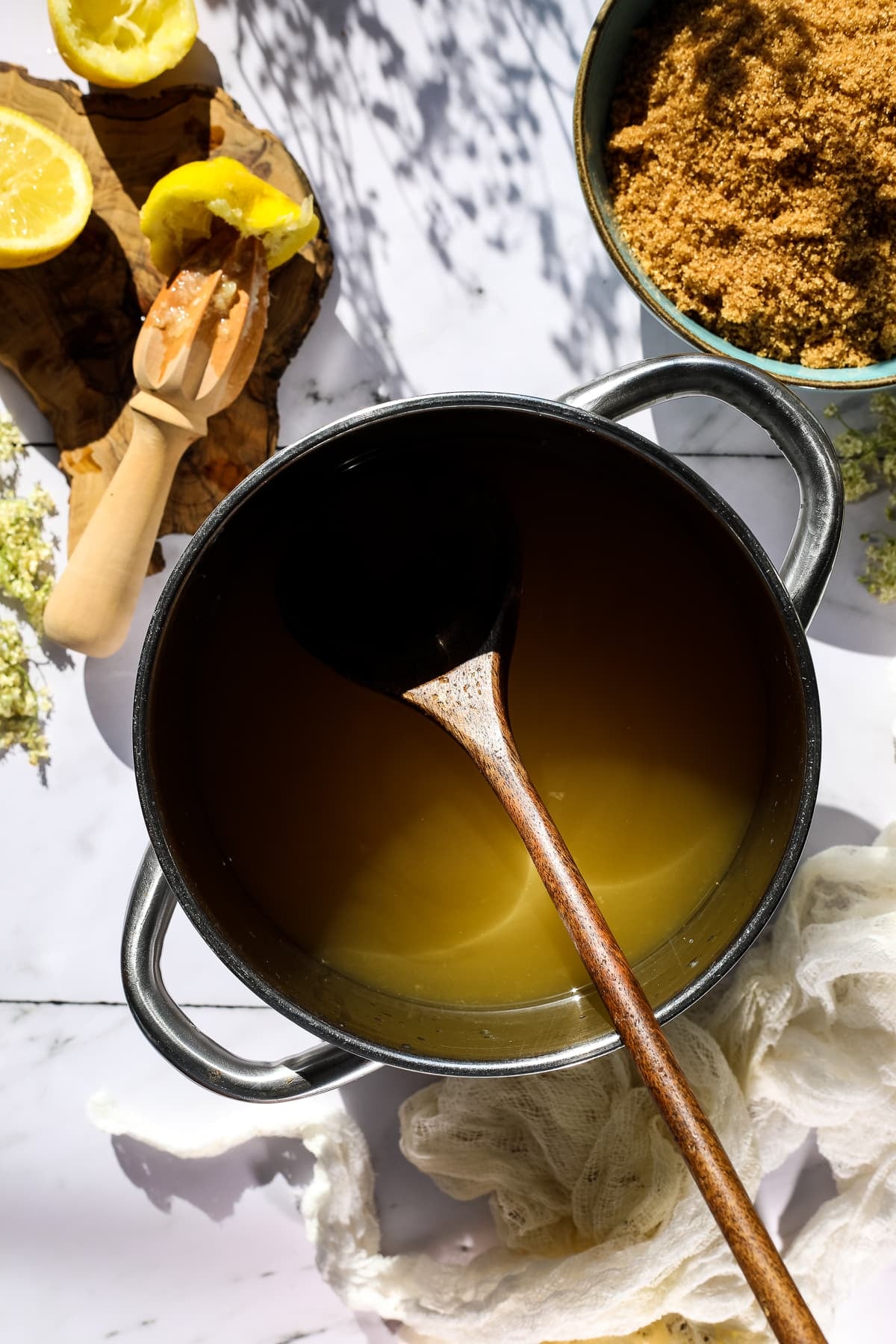
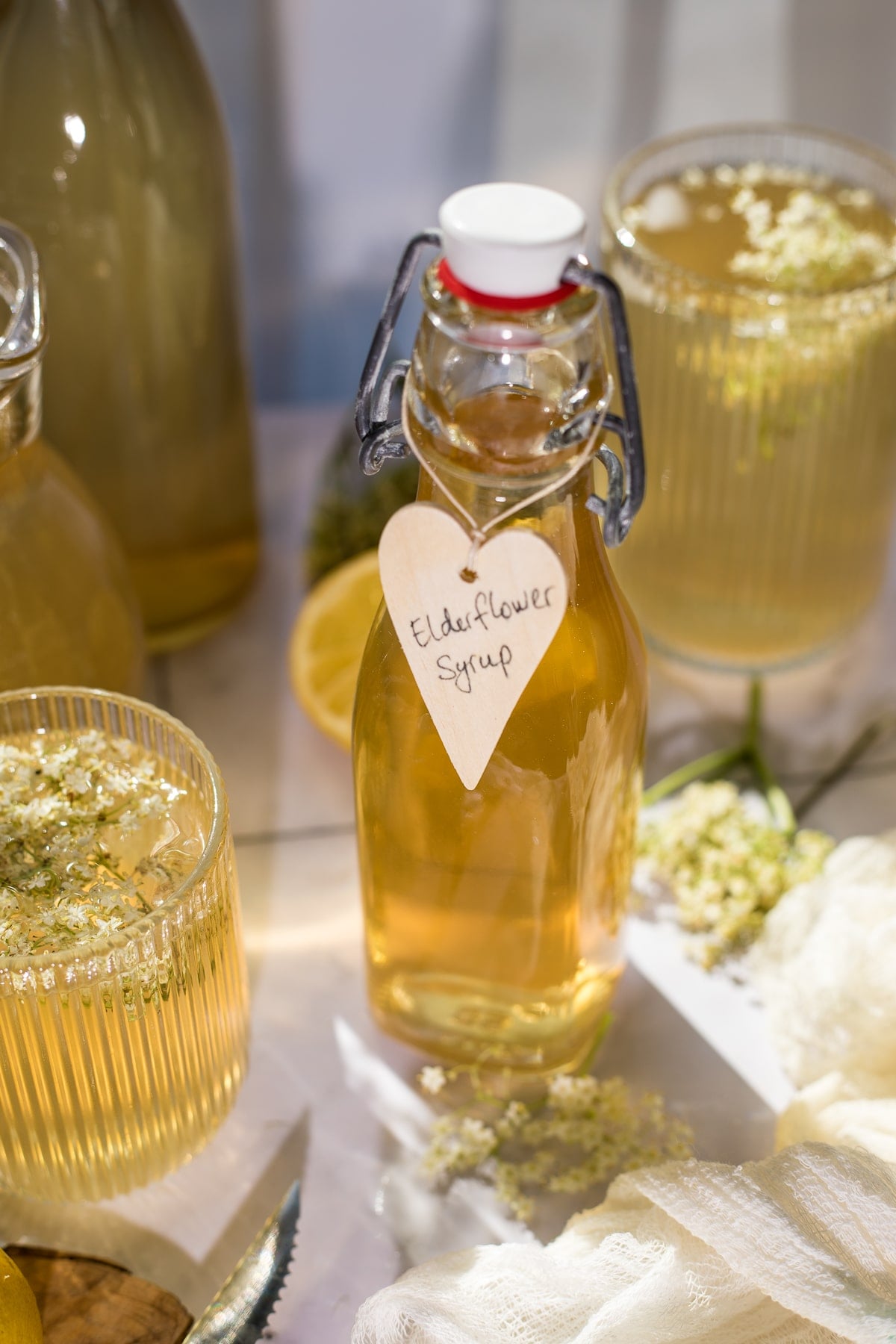
Return the strained liquid to the pot and stir in the sugar until dissolved. Simmer gently for a few minutes, then pour into sterilized bottles or jars.
Hint: For the freshest floral flavor, pick elderflowers on a warm dry morning when the blossoms are fully open. Avoid flowers growing near busy roads.
Substitutions
- Sugar: You can slightly reduce the sugar, but avoid going too low if you plan to store the syrup for more than a few days. Sugar helps preserve the syrup safely.
- Lemon: Lime can be used for a slightly different citrus note.
- Vegan: This recipe is naturally vegan and vegetarian.
- Refined sugar free: Light honey can work for flavor, but storage time will be shorter and the floral flavor changes slightly.
If you enjoy naturally sweetened syrups, try my homemade berry compote recipe as well.
Variations
- Sparkling Elderflower Soda: Mix the syrup with sparkling water and extra lemon.
- Cocktail Version: Add it to gin, prosecco, or vodka cocktails.
- Herbal Twist: Simmer with fresh mint or basil.
- Berry Elderflower Syrup: Add strawberries or raspberries during infusion for a fruity version.
- Kid Friendly: Stir into lemonade or freeze into popsicles.
You can also drizzle it over pancakes, yogurt, vanilla ice cream, or fruit salad. link)
Equipment
Using the right equipment helps keep the syrup clear and fresh tasting.
- large heavy-bottomed pot
- cheesecloth or nut milk bag
- fine mesh sieve
- sterilized glass bottles or jars
- funnel
A cheesecloth produces a cleaner syrup than a regular strainer alone. If using plastic instead of glass bottles, store only in the refrigerator and consume quickly.
Storage
Because this recipe uses less sugar than traditional elderflower cordial recipes, proper storage is especially important.
Refrigerator Storage
Store the syrup in sterilized airtight bottles or jars in the refrigerator for up to 2-3 weeks.
For best freshness:
- Always use a clean spoon when serving
- Keep refrigerated after opening
- Store away from direct sunlight
Minimum Sugar for Storage
Traditional elderflower syrups often use a 1:1 ratio of liquid to sugar for long preservation. Since this healthier version uses less sugar, refrigeration is necessary unless properly canned.
For safe longer-term storage, avoid reducing the sugar below roughly 50-60% of the liquid weight unless freezing the syrup.
Canning Option
If you want pantry storage, the syrup would need to be made with a higher sugar ratio (closer to classic 1:1 sugar to liquid) and processed in sterilized jars using using a proper water bath canning method. Properly canned syrup can last up to 1 year in a cool dark pantry.
Once opened, refrigerate the jar and use within 2-3 weeks.
Freezing
Elderflower syrup freezes very well. Freeze in small portions or ice cube trays for up to 6 months.
How to Serve
This elderflower syrup is incredibly versatile, and the way you dilute it makes all the difference in flavor.
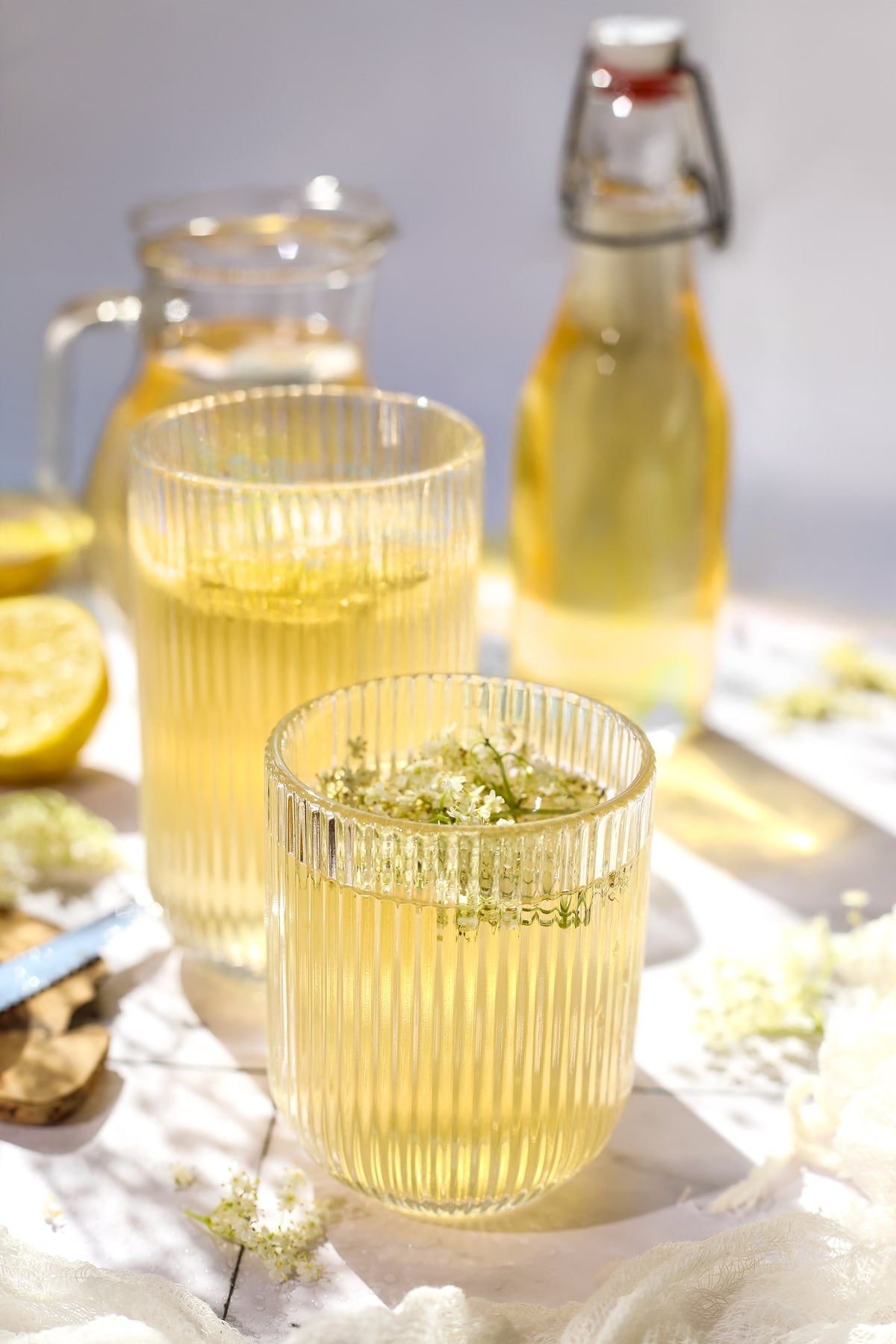
For a light, refreshing infused elderflower drink, mix 1 part syrup to 6-8 parts cold water or soda. This creates a subtle floral water that's perfect for everyday hydration.
If you prefer something more vibrant and lemonade-like, reduce the dilution to 1:4 or even 1:3, and optionally add a little extra fresh lemon juice for brightness. You can also adjust the sweetness and intensity to taste, depending on whether you want a delicate floral hint or a bold spring lemonade.
For a standard glass - 1 cup (250 ml) of water you would need from 1 ½ teaspoon of syrup (1:8 ratio - light infused water) to 2 ½ teaspoon (1:6 ratio - balanced lemonade).
Top Tip
Don't overcook the elderflowers. A gentle simmer preserves their delicate floral aroma, while prolonged boiling can make the flavor dull or slightly bitter.
FAQ
Yes, but lower sugar means a shorter shelf life. Reduced-sugar syrup should always be refrigerated or frozen unless properly canned.
Fresh elderflowers provide the best flavor, but dried elderflowers can work in smaller quantities. The flavor will be slightly different and less vibrant.
Too many green stems or overcooking the flowers can cause bitterness. Remove thick stems and simmer gently.
Mix it into sparkling water, cocktails, iced tea, desserts, yogurt, or lemonade.
Related
Looking for other recipes like this? Try these:

Pairing
These are my favorite dishes to serve with [this recipe]:
Easy Elderflower Syrup
Ingredients
- 2 cups or 500 ml water
- 2-3 oz or 60 - 80 g fresh elderflower florets stripped from stems (should be about 15 large elderflower heads)
- Juice of 1 large lemon
- 1 - 1¼ cups or 7-9 oz / 200 -250 g brown sugar to taste

Instructions
- Gently shake elderflower heads to remove any insects and remove thick stems.
- Place elderflower florets, lemon juice, and water into a large pot. Bring slowly to a gentle simmer, then remove from heat and let infuse for 15-20 minutes.
- Strain through a cheesecloth-lined sieve into a clean pot or bowl.
- Stir in brown sugar while the liquid is still warm until fully dissolved.
- Pour into sterilized glass bottles and let cool completely before sealing. Store in the refrigerator or process for longer shelf storage if desired.
Notes
Nutrition
Food Safety Notes
Only forage elderflowers if you are absolutely certain of identification. Avoid flowers growing near roadsides or polluted areas.
Never consume raw elderberries or other parts of the elder tree in large quantities, as some parts can be toxic when uncooked.


Elena Szeliga says
Absolutely loved how fresh and floral this turned out - a perfect taste of spring!